When walking into a restaurant, most diners have a built-in hierarchy of food safety in mind.
- At the top sits the classic plated meal, carried out by a professional server straight from the chef’s hands.
- The low point being the buffet, which is often thought of with safety concern and skepticism.
Many ignore buffet-style experiences, believing they are a bad practice for food safety because of shared utensils, multiple hands touching them, and other unknown variables.
Because many believe that buffets are risky, they opt for the traditional sit-down experience. The assumption is that food coming directly from a kitchen environment must be inherently safer. This mindset is incredibly common and entirely comfortable. It also happens to be wrong much of the time.
Food safety is rarely as simple as the format in which your meal is served. The journey your food takes from the prep station to your mouth involves numerous variables. When you look at what is actually happening behind the kitchen doors and out on the buffet floor, you can make a more informed decision about how you decide to eat.
The Illusion of the Sterile Kitchen
We often romanticize restaurant kitchens as perfectly safe, with medical-grade clean environments. In reality, these environments are closer to a coordinated, high-stress assembly line. Once your dish is plated, it doesn’t instantly teleport to your table; it has to go through several steps, including resting in the heat, moving, and human interaction.
How Plated Meals Travel to Your Table
Before you even take your first bite, your meal has been handled by a variety of individuals. The prep cook has to prepare the base ingredients; another cook handles your protein, and there may even be a plating specialist who handles the food for presentation. Once your food is ready, it may sit for a minute or two before your waiter brings it to you. Every interaction adds a new touch point.
The Human Element in Restaurant Kitchens
Restaurants are required to follow health department guidelines and regulations, but in the most stressful moments, some of these rules may be bent or broken. For example, gloves designed to protect against cross-contamination and ensure food safety may be worn for too long. Hands move rapidly to keep up with incoming tickets. An expediter might quickly adjust a sliding garnish with a bare finger, or a server might accidentally grip the inner rim of your plate. These minor, unseen moments introduce genuine risks that diners blissfully ignore simply because they occur behind closed doors.
How Well-Run Buffets Actually Work
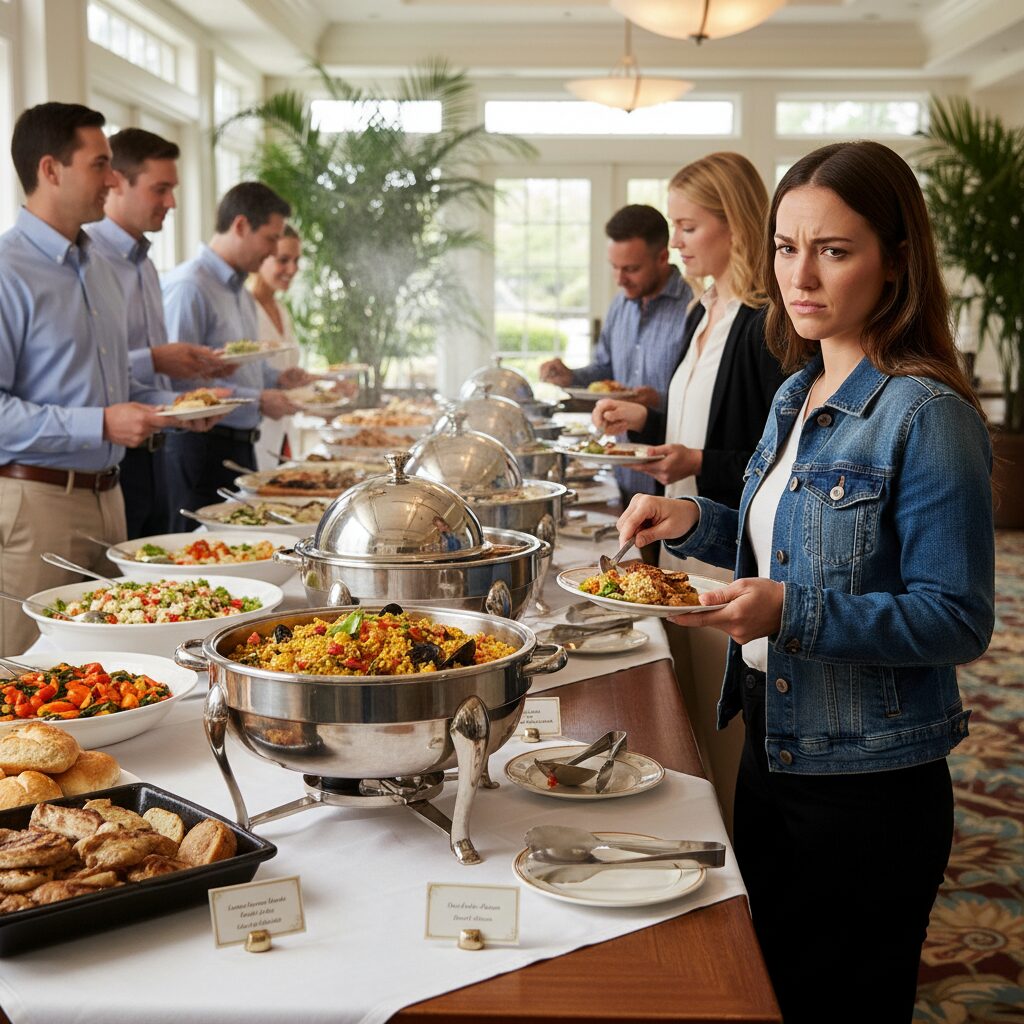
Now look at a professionally managed buffet. Unlike the chaotic kitchen environment hidden from view, a self-serve station operates out in the open. The systems designed to protect your meal are visible and highly structured.
Visible Control Points
A quality buffet restricts access through a single entry point.
- Guests are encouraged, or even required, to sanitize their hands before grabbing a plate.
- Sneeze guards create a physical barrier between the guests’ breathing zone and the food displays.
- Diners handle only their own plate and the designated serving tools. They do not touch the food itself.
Temperature and Utensil Management
Staff members constantly monitor the floor.
- Utensils are swapped out regularly to ensure any potential contamination is removed and clean utensils are used.
- Food temperature is tightly controlled as well, removing the concern that food is just sitting out in room temperatures and allowing bacteria to grow.
- When food items run low, they are replaced entirely rather than topped off, ensuring that old food does not mix with fresh food, reducing the risk of contamination.
Comparing the Real Risks
Evaluating food safety means moving past our initial emotional reactions and looking at the actual processes involved. The primary factor in restaurant sanitation is not the service style. It revolves around the number of hands touching your meal and the discipline of those specific hands.
Tracking the Touchpoints
In a traditional dining setting, the number of direct touchpoints between the kitchen staff and your food is relatively high. The food is plated, wiped down, and garnished by hand. At a self-serve station, the food goes straight from the cooking vessel into a holding pan. From there, you use a utensil to move it directly to your plate. The chain of custody is actually shorter.
The Psychology of Unseen Hazards
People naturally fear what they can see. Watching a child reach toward a bread basket triggers an immediate alarm bell. We do not get that same alarm bell when a stressed cook accidentally cross-contaminates a cutting board in the back of the house. The real risk on a buffet line is not the format itself. The danger lies in our false sense of security regarding unseen kitchen operations.
Frequent Questions About Restaurant Food Safety
Are buffets safe?
Restaurant safety is determined by individual restaurants. Every restaurant has specific food safety guidelines to help maintain a sanitary environment. Knowing this, buffets are just as safe to visit as a traditional sit-down restaurant. If there were real safety concerns about buffets, they wouldn’t be able to operate without meeting food safety guidelines and regulations.
How can I tell if a buffet is safe?
Observe the staff and the setup. Look for hand sanitizing stations at the start of the food line. You want to see visible steam rising from hot food or cold foods resting directly on ice. Notice if employees are actively wiping down surfaces and replacing dropped tongs. Visible, active staff are the best indicator of a safe environment.
Does the kitchen staff touch my food after cooking?
Yes, frequently. A specific example being that someone had to plate your food. This is generally not the same person who cooked it. During the cooking process, utensils such as tongs or forks are used to prevent a person from directly touching food, but plating typically requires using their hands. This is standard industry practice, but it relies heavily on frequent handwashing and glove changes to remain safe.
Shift Your Focus to Process Over Format
Judging a restaurant’s cleanliness solely by its service style leaves you blind to the mechanics of food safety. A traditional sit-down meal offers comfort, but it is usually built on a lack of visibility and understanding of the restaurant process. Self-serve dining gives you the opportunity to see exactly how the food is handled and the process by which it reaches your plate.
So, next time you are trying to decide what to eat, consider the buffet you have been curious to try. When you visit a new restaurant, you should always pay attention to cleanliness and food safety practices. You may find that your local buffet is cleaner than your favorite sit-down restaurant, and it was worth the experience.
Have any questions, or want to set up your next catered event? Contact us!
[…] To read a full breakdown on buffet food safety, GO HERE! […]